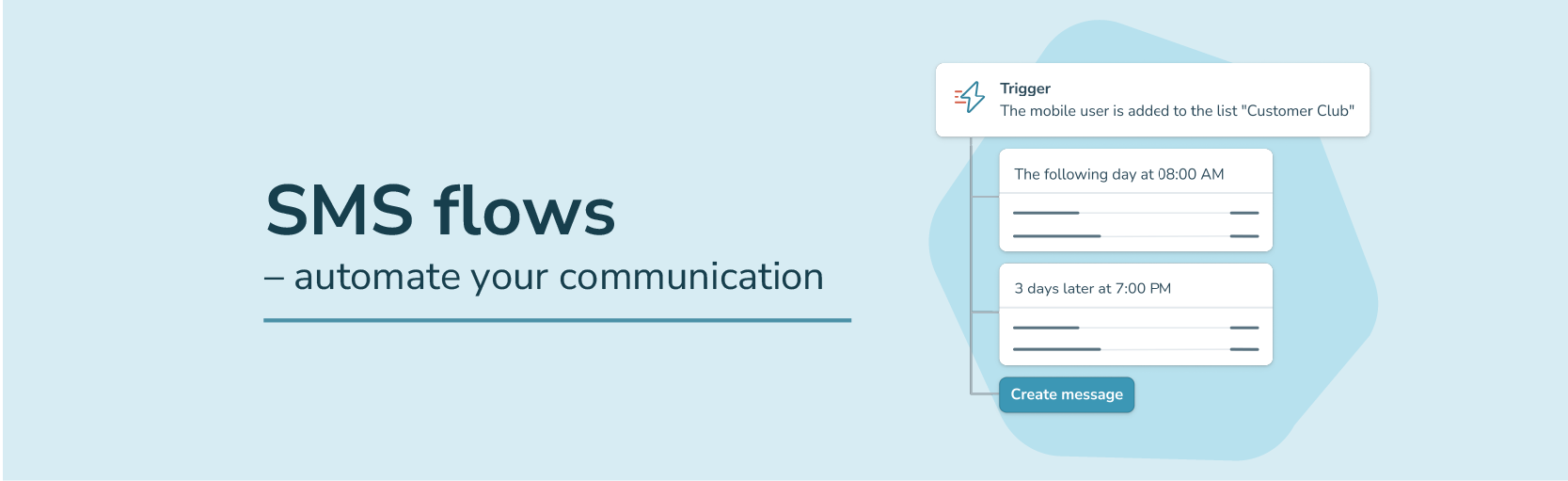


With SMS flows, you can send automatic SMS messages to your customers at precisely the right moment – without having to manually press send every time. This could be, for example, an abandoned cart SMS, an order confirmation, a booking reminder, or a welcome flow for new customers.
In short, SMS flows – also known as SMS automations – help you create more relevant and effective communication through automated flows triggered by customer behaviour.
For businesses, this means less manual work, faster communication, and a better customer experience.
What is an SMS flow?
An SMS flow makes it possible to automatically send SMS messages to your customers based on specific actions or events they perform. This could be, for example, when a customer books an appointment, abandons an item in their cart, or completes a purchase.
Instead of manually sending your SMS messages via your SMS gateway, messages are automatically triggered (sent) based on rules and customer data from your systems. This enables fast, relevant and personalised communication – without extra manual work.
SMS flows are often used together with an integration for your e-commerce platform and marketing tools such as Shopify, Klaviyo, WooCommerce or Magento. This is because the customer data needed to start the flow is often found in these systems.
Why use SMS automation?
By automating parts of your SMS communication, it becomes easier to communicate with customers at the times when the message is most relevant. Instead of manual messages, you can set up automatic SMS flows that run in the background and are triggered by customer actions.
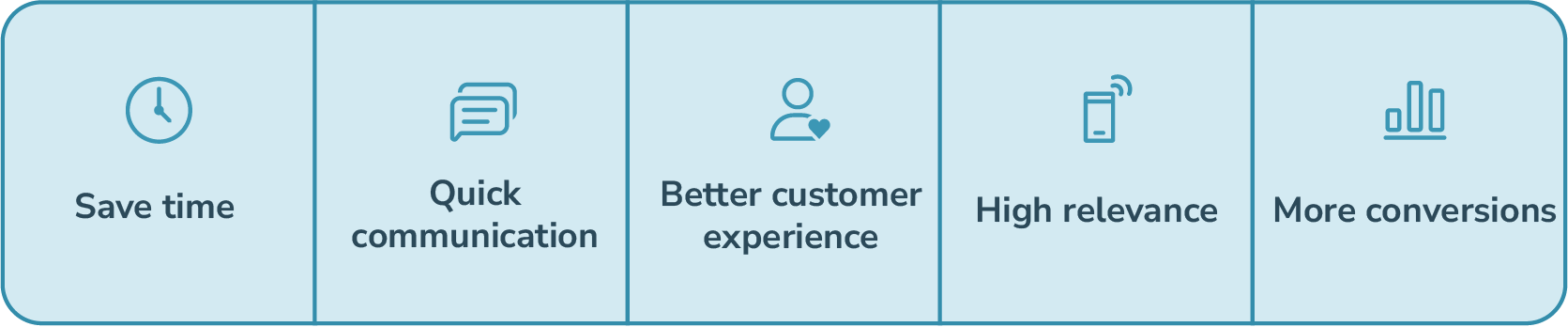
It saves time in daily operations and also ensures a faster, more personalised customer experience.
Many companies use automatic SMS flows to, among other things:
- increase conversions and sales
- reduce missed bookings and abandoned carts
- send important information automatically
- create better customer experiences
- automate manual workflows
Because SMS messages are read quickly, SMS automation is particularly effective for time-sensitive and important communication.
Popular SMS flows
SMS flows can be used in many different parts of the customer journey – for marketing, service, and customer communication. Here are some of the most popular SMS automations businesses use today.
Abandoned cart SMS
An abandoned cart SMS is automatically sent to customers who have added items to their cart but have not completed the purchase. This flow is used to remind the customer about their cart and bring them back to the online store.
Abandoned cart SMS messages are among the most popular SMS flows in e-commerce because the messages are sent at a time when the customer has already shown high purchase intent.
Order and delivery updates
SMS flows are often used to automatically send order confirmations, delivery updates, and messages about delays or pickups.
This type of SMS message helps create a better customer experience because the customer is continuously updated with important information about their order. At the same time, it reduces the need for manual updates and customer service enquiries.
Booking and appointment reminders
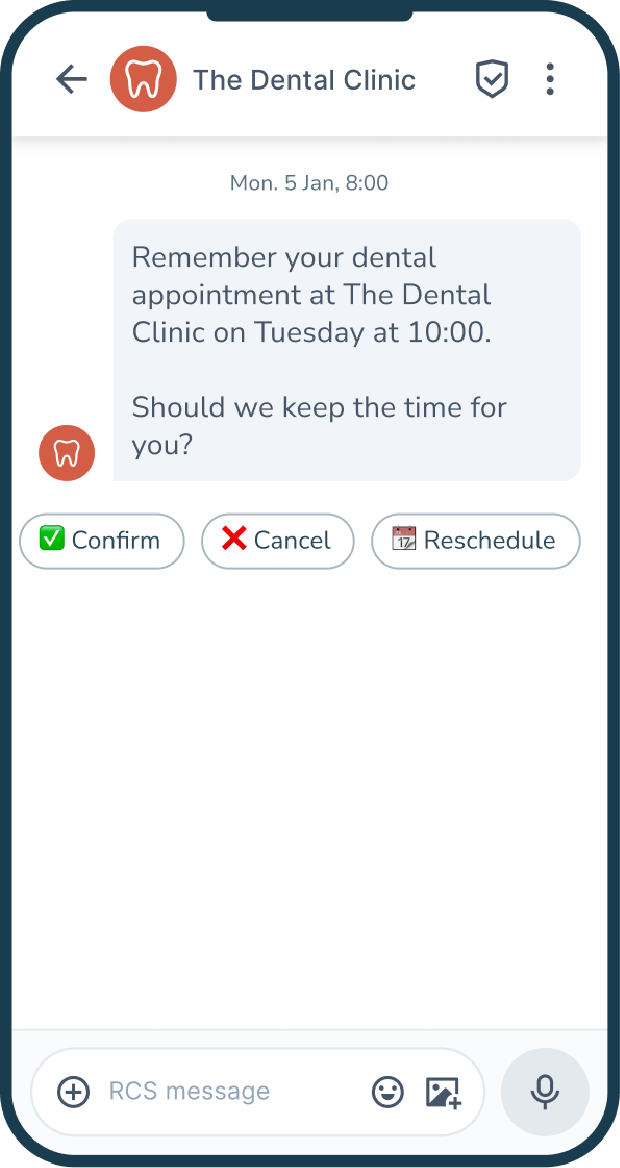
Booking and appointment reminders are one of the most frequently used SMS flows in the service industry. Here, SMS messages are automatically sent before an appointment, booking, or reservation.
This helps reduce no-shows and ensures that the customer receives important information at the right time. You can also choose to send an RCS message instead, where the customer can confirm, cancel, or reschedule their booking using interactive buttons and automated response options.
Welcome flows
A welcome flow is automatically sent to new customers or subscribers when they join a customer club, create an account, or make their first purchase.
This flow is often used to welcome the customer, introduce the company, or create a positive first experience with the brand. It also provides an excellent opportunity to start the relationship with relevant and personalised communication.
Loyalty flows
Loyalty flows are used to automatically communicate with existing customers through, for example, point updates, member benefits, birthday greetings, or special offers.
The flow helps strengthen customer relationships and keep the company top of mind through relevant and ongoing communication.
How to get started with SMS flows
Getting started with SMS flows doesn't have to be complicated. Many businesses start with one or two simple flows and continuously expand their setup from there.
SMS flows in inMobile
If you work with SMS service, you can set up simple SMS flows directly in inMobile. Here, the flow is automatically started when a contact is created on your chosen SMS list in inMobile.
See how to do it: Guide to creating SMS automations in inMobile.
SMS marketing flows
If you work with SMS marketing, you might need more advanced flows, and in this case, it will often be better to set up your SMS automations through an integration with your company's shop system, booking system, CRM, or marketing platform. This makes it possible to send SMS messages based on customer data and actions from these systems.
FAQ: SMS automation
An SMS flow is an automated series of SMS messages that are sent to customers based on specific actions or events. For example, this could be when a customer abandons their cart, books an appointment, or completes a purchase.
SMS automations are used for, among other things, abandoned cart flows, booking reminders, order confirmations, loyalty communication, and automated service messages. The typical purpose is to save time, create better customer experiences, and communicate more relevantly with customers.
Many businesses start with one or two simple SMS flows and gradually expand their setup. SMS automations are typically set up directly in your SMS gateway or through an integration with your company's e-commerce system, CRM, booking system, or marketing platform.
No. SMS automations are used by online stores, service companies, clinics, membership organisations and many other industries. Any business that requires fast and relevant customer communication can use SMS flows.
SMS automations work by an action or event automatically triggering a flow of SMS messages. For example, the flow can be activated when a customer signs up, makes a purchase, or fails to complete a booking or order.
SMS automations can be used by both small and large businesses. It is particularly relevant for companies involved in marketing, customer service, booking, e-commerce, or other direct customer communication.
