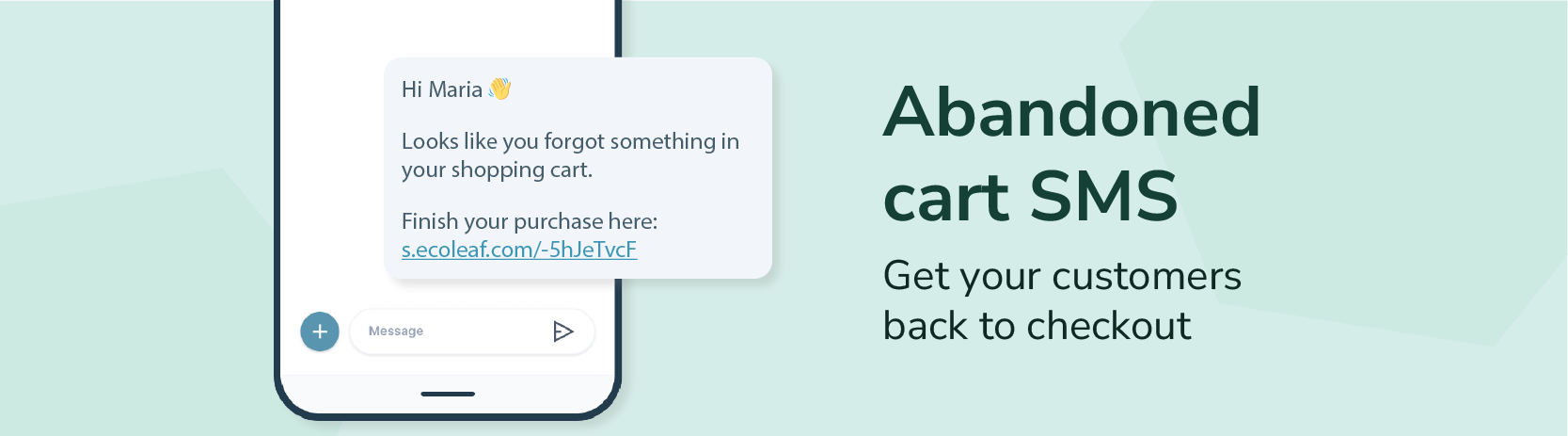
Abandoned Cart Flow: Get your customers back to checkout with SMS


An 'abandoned cart SMS' is an automated message sent to customers who have added items to their basket on your webshop - but not completed the purchase. The purpose is simple: get the customer back to checkout while interest is still warm.
For many online stores, such a message can be the difference between a lost sale and a completed order.
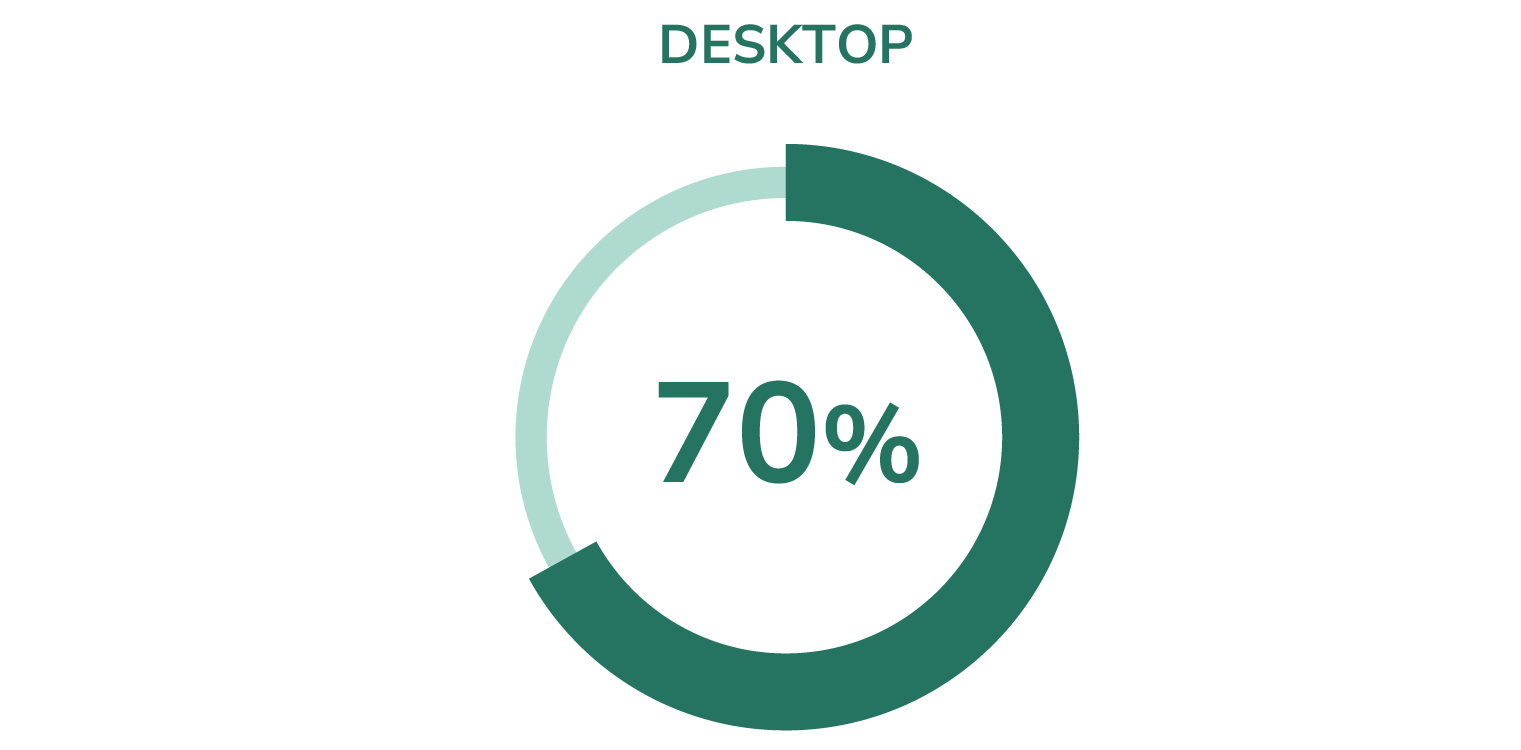
Abandoned carts - also known as abandoned basket - are a natural part of e-commerce. In fact, up to 70% of customers abandon their cart without completing their order.
Customers get distracted, compare prices or need that final push to complete the purchase. The question is not whether it happens, but what you do about it.
Most e-commerce websites already work with email flows. But when inboxes are full and timing is crucial, SMS is an effective supplement.
In this article, you'll get a practical and strategic overview of when an abandoned cart SMS makes sense and how to do it.
What is an abandoned cart - and why does it happen?
An abandoned cart occurs when a customer adds items to the shopping cart but leaves the website without completing payment.
This does not necessarily mean that the customer has lost interest. In many cases, it's more about timing or friction than lack of purchase intent.
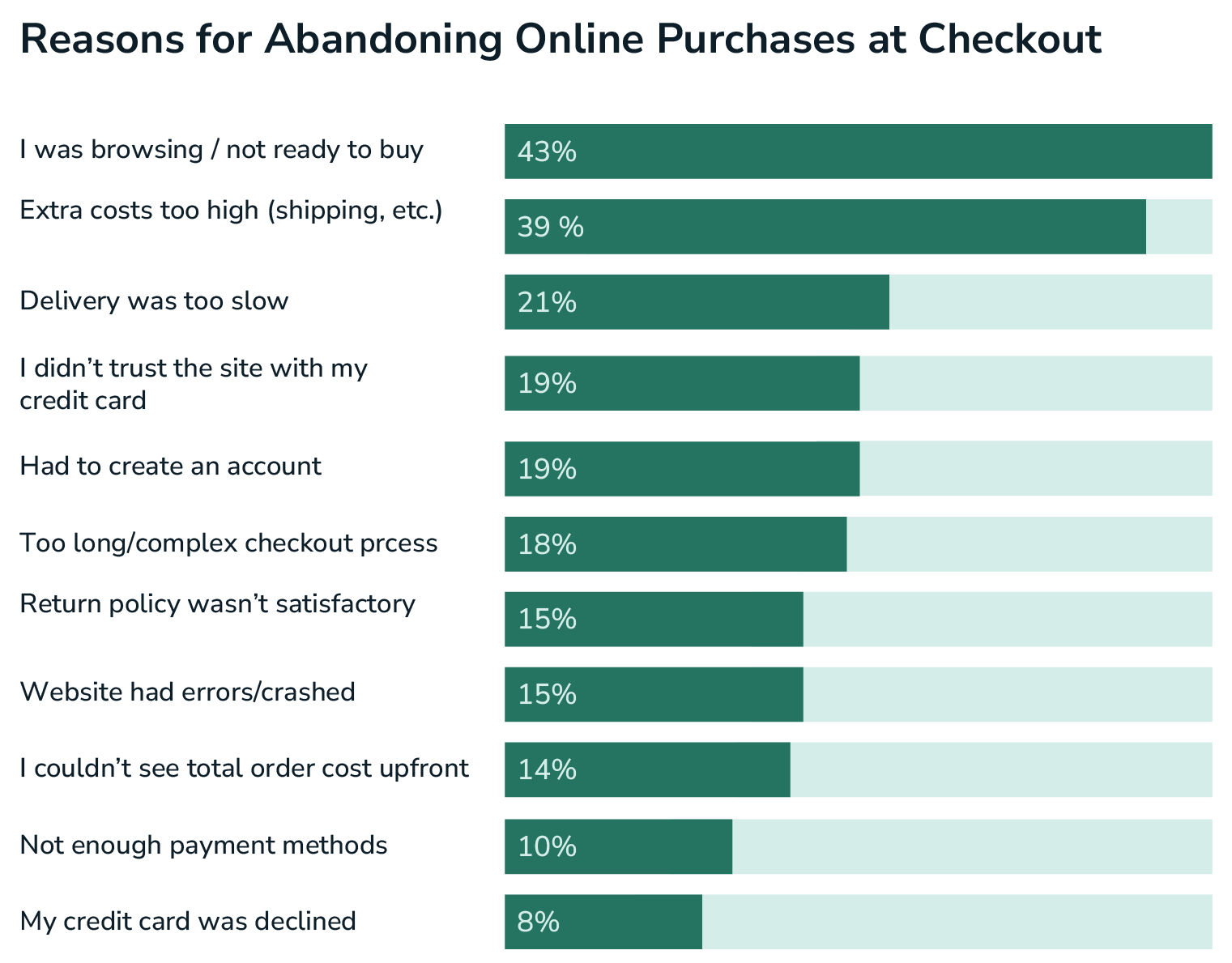
Typical causes of basket loss:
- The customer wasn't ready to act yet.
- The customer gets distracted.
- The shipping or total price is surprising.
- Checkout feels too long or difficult.
- The customer does not trust the website.
- Prices are compared across shops.
It's important to understand that an abandoned cart is often a sign of hesitation - not rejection.
That's why it makes sense to work strategically with a follow-up. Not as an aggressive sales pitch, but as a service: "You forgot something - do you want to finalise your purchase?"
When a follow-up happens at the right time and on the right channel, it can make a real difference.
See for example inMobile's case with Soundliving. Their abandoned cart flow created a 360x ROAS in the first month after launch.
Whyuse SMS for abandoned cart?
When a customer leaves the online shopping cart, the interest is often still there. The question is how you follow up.
For many e-commerce companies, email is the default solution in an abandoned cart flow. There's nothing wrong with that, and an abandoned cart email can perform just fine.
The problem can arise because email is also a channel where messages are easily overlooked in a crowded inbox - and sometimes they are not seen until several days later. If timing is critical (like an abandoned cart) that's a challenge.
This is where SMS marketing works as an effective supplement.
An SMS is direct, personalised and lands where the customer already is - on their mobile phone. 98% of all SMS messages are opened and 90% within 5 minutes of receipt.
This makes SMS particularly suitable for situations where:
- purchase intent is high
- the decision is almost made
- the customer just needs a little push.
This doesn't mean that SMS should necessarily replace email. On the contrary, it often works best as part of an overall marketing setup where the channels work together.
Used correctly, SMS is a positive reminder for the customer and a way to reduce friction in the buying process.
How to build an abandoned cart flow
An effective abandoned cart flow is not about sending one quick message and hoping for the best. It's about tapping naturally into the customer buying journey.
If you want to send an SMS when a customer leaves the shopping cart, your shop system must be able to tell you that this has happened. Therefore, an integration between your shop system and your SMS platform is a requirement.
In inMobile, you can solve this with direct integrations to e. g. Shopify, Magento and WooCommerce. If you use a different shopping system, the connection can typically be established via Zapier or Make, so an abandoned basket still triggers an automatic SMS.
Once the integration is in place, you can start building the flow itself. Here are three things you should pay special attention to.
#1 Segmentation
Segmentation in an abandoned cart flow is all about one thing: relevance.
Some webshops send the same message to everyone and have good success with this approach. Others work more advanced and actively use data from the shop system to segment their audiences.
For example, you can create segments based on:
- New vs. returning customers.
- High vs. low basket value.
- Past buying behaviour.
- Loyalty or VIP status.
You can also customise the message according to what's in the basket. A discount code can make sense on selected products - but not necessarily on promotional or low margin products.
And of course, you should only send SMS to customers who have consented to marketing.
The better you use your data, the more relevant your abandoned cart SMS will be - and the more likely it will be perceived as a service rather than a sales attempt.
#2 Timing and frequency
Timing is crucial in an abandoned cart flow.
If you send an SMS too quickly, it may seem rushed. If you send it too late, the customer may have moved on - either mentally or to a competitor.
However, there is no one correct time.
It depends on your product and your target audience. Impulse purchases often require a quick follow-up, while more expensive products can require longer consideration time.
The important thing is not to guess - but to test.
Frequency is just as important. An abandoned cart flow on SMS should generally consist of one well-placed message - possibly followed by an email if the purchase is not completed within a certain amount of time.
Remember to exclude customers who have already purchased and those who have just received other promotional messages. You can control this with inMobile's Cooldown function.
An abandoned cart SMS should be perceived as helpful and relevant.
When timing and frequency are well-thought-out, SMS becomes a natural part of the buying journey.
#3 Content
An abandoned cart SMS should be short, concise and with a clear CTA.
It should:
- link directly to the saved basket
- have one clear purpose
- avoid unnecessary text
- don't always start with a discount by default.
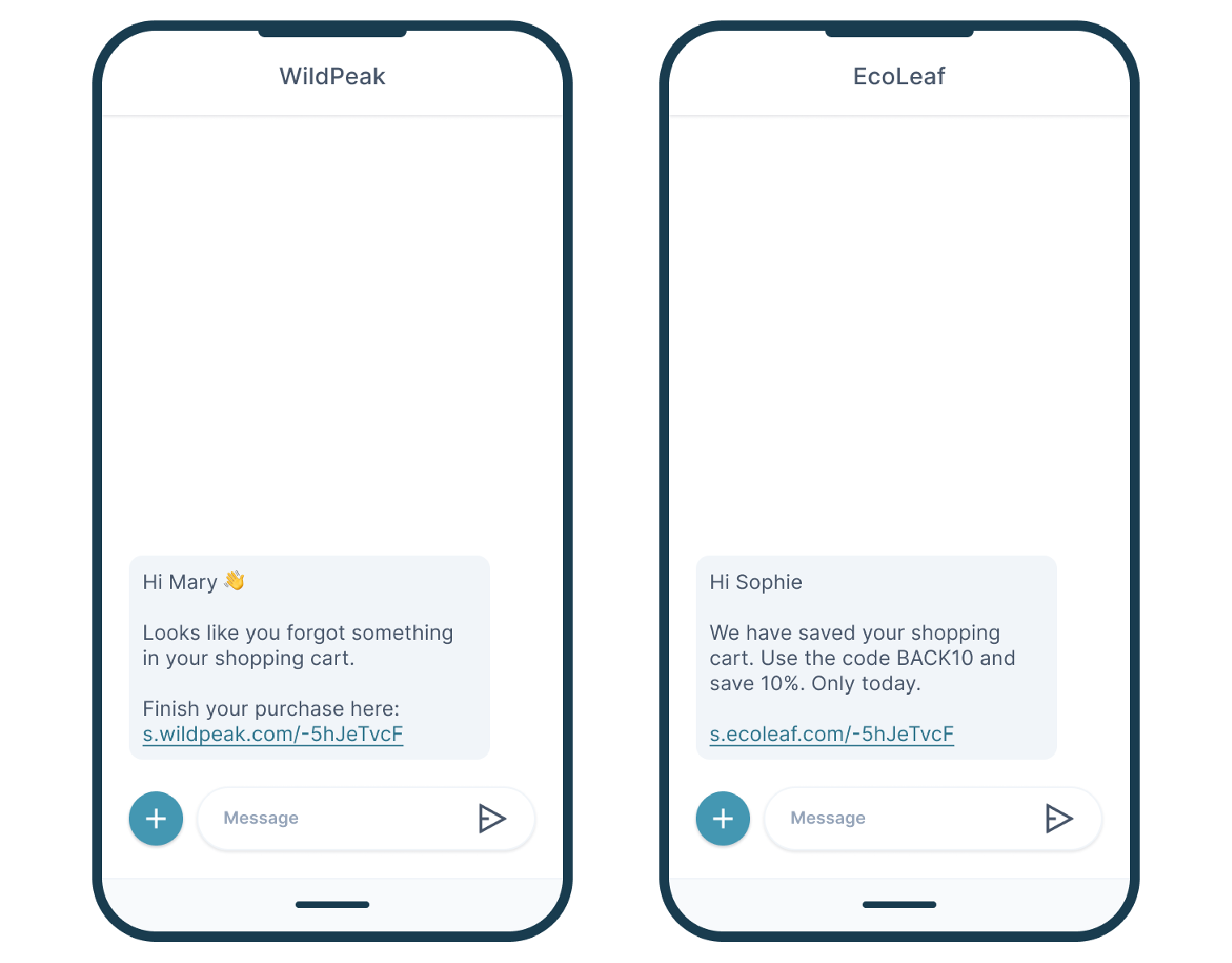
It doesn't have to be that complicated.
If a discount is used, it should be strategic. E.g. with high basket value or repeated abandoned carts.
SMS, RCS and email - what's the difference in an abandoned cart setup?
An efficient abandoned cart flow is not about choosing one channel. It's about using the right channel at the right time.
For many e-commerce websites, email is the foundation. A classic abandoned cart email can work really well - especially if you already have a structured approach to transactional email and marketing automation. The benefit is space for more content such as product images and in-depth descriptions.
SMS, on the other hand, is short and direct. It lands on your mobile instantly and therefore works well as a quick reminder while the purchase intent is still warm. Use SMS either as a first reminder or as a follow-up if the email is not opened.
RCS can be seen as a mix of SMS and email. With RCS marketing , you get the best of both worlds: You can send visual messages with images, buttons and branding - but still directly to the mobile messaging app.
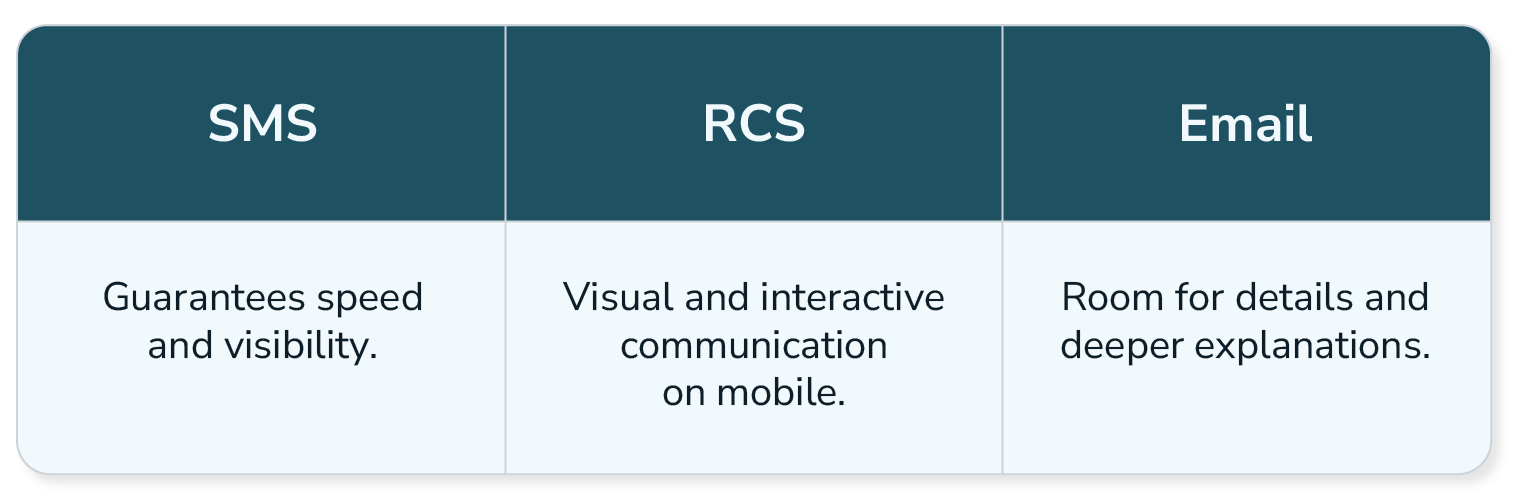
The difference is not only in the format, but also in the experience.
For many webshops, a combination of channels works best. It's crucial that the channels work together technically via your SMS gateway and the right integrations - and that you make it as easy as possible for the customer to complete the purchase.
When you should NOT use an abandoned cart SMS
Although an abandoned cart SMS is usually really effective, it's not always the right solution.
Firstly: If you don't have marketing consent, don't send marketing SMS messages. It's not just good manners - it's a legal requirement.
Secondly: If your checkout has technical issues or unnecessary friction, you should start there. An SMS flow can't save a bad buying experience. If your customers are consistently dropping out at the same stage, there might be another problem you need to solve first.
Finally, consider your brand and target audience. If you sell products with a long decision-making process or very low purchase frequency, an SMS can be perceived as very direct. Here you may need to look into further segmentation - and only send an abandoned cart SMS when the customer has browsed many times.
An abandoned cart SMS is really powerful - especially when used wisely.
"We automatically send an SMS reminder with a link to customers who cancel their purchase. The result speaks for itself! When we spend DKK 1 on SMS, we get DKK 200 back" - Simone Simonsen, General Manager at barnetsverden.dk
FAQ: Abandoned cart
An abandoned cart flow is an automated series of messages that are activated when a customer abandons the basket on your website without completing the purchase. The flow can consist of one or more messages - typically via email, SMS, RCS or a combination - and aims to get the customer back to checkout to complete the purchase. An abandoned cart flow is based on data from the webshop and requires an integration so that the system automatically detects when a cart is abandoned.
An abandoned cart SMS is an automated text message sent to a customer who has added items to their cart on your online store, but has not completed the purchase. The aim is to get the customer back to checkout quickly while purchase intent is still high.
It depends on your product and your target audience. Impulse purchases often require quick follow-up, while more expensive products may require more consideration time. The most important thing is to test and find the time that fits your customers' buying journey.
Not necessarily. Many webshops start with a neutral reminder and only add a discount if data shows it is necessary.
No. You may only send marketing SMS messages to customers who have given their explicit consent/permission.
There is no real difference. Abandoned cart is the term used more often, while lost basket is just a different term for the same thing. Both cover the situation where a customer has added items to their basket but leaves the website without completing the purchase.
One does not exclude the other. Email allows for detail and explanation, while SMS provides speed and visibility. For many webshops, a combination works best.
This requires an integration between your webshop and your SMS platform. Integrations such as Shopify, Magento and WooCommerce make it possible to automatically detect when a basket is abandoned and trigger an SMS.
